


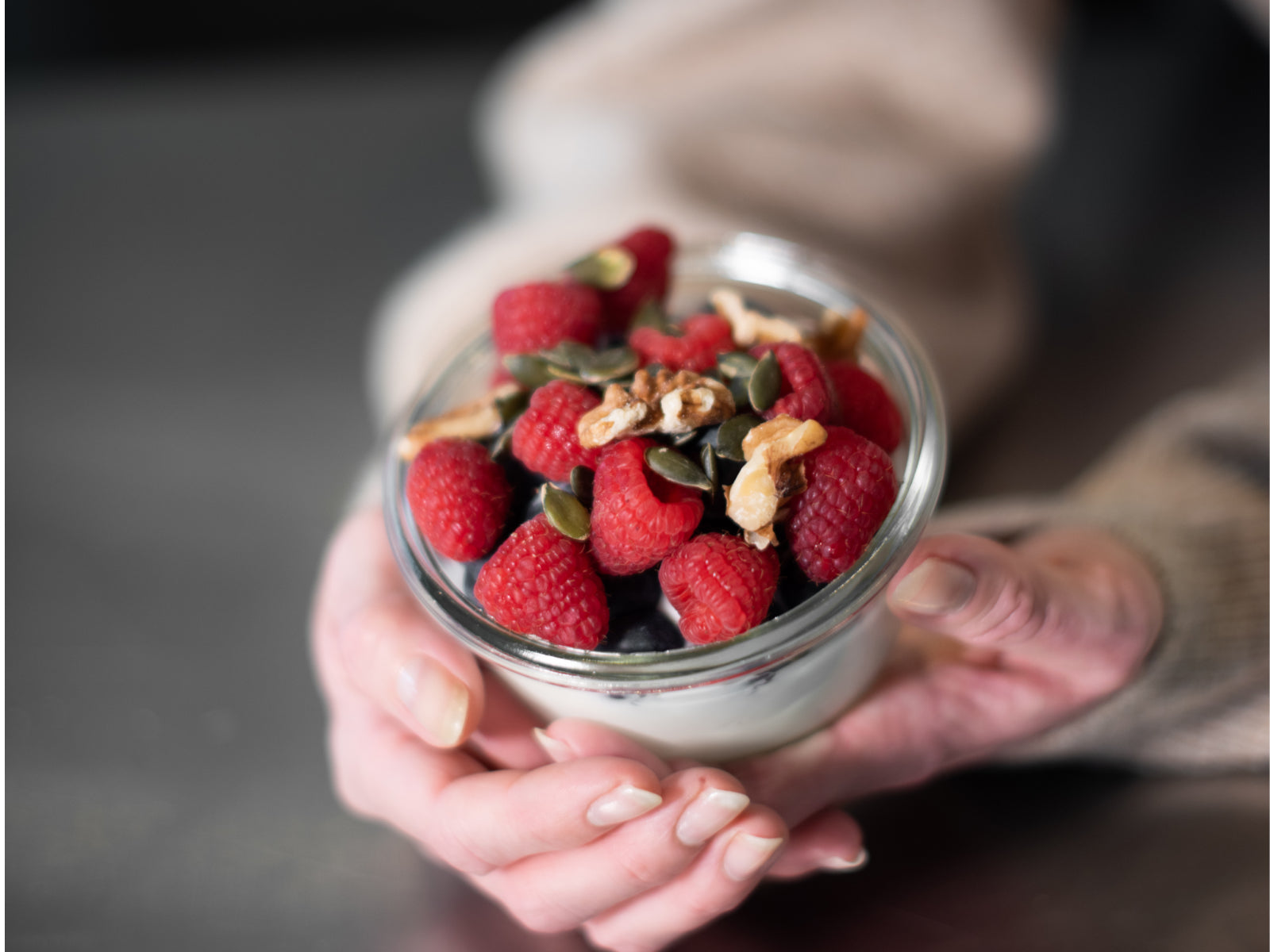
Microbiome and Diet: Eat Your Way to a Healthy Gut
Your diet is perhaps the single biggest factor influencing your gut microbiome, and it is also the one you can act on right now. That may sound straightforward, but behind that statement lies a fascinating and complex interplay between food, bacteria, and health. Here we take a closer look at how your microbiome and your diet are connected.
How the Food You Eat Affects The Microbiome
Every time you eat, you are sending food down to the billions of microorganisms living in your gut. What you choose to eat determines which bacteria thrive, and which do not.
In other words, the microbiome is shaped by what you eat: which bacterial strains dominate, how diverse it is, and how well it functions.
Research shows that even short-term changes in diet can be detected in the microbiome within just a few days. It is a system in constant flux, which means every meal is an opportunity to nudge your gut health in one direction or another.
Foods that Nourish Your Bacteria
Not all food is created equal when it comes to your microbiome. Some foods actively feed the good bacteria and promote diversity in the gut. Others do the opposite.
The most beneficial categories are:
- Fermented foods - such as yogurt, kefir, kimchi, sauerkraut, and kombucha - these contain live bacterial cultures that can contribute directly to the microbiome
- Plant-based variety - the more different vegetables you eat each week, the more diverse your gut flora will become. Aim for at least 30 different plant sources weekly
- Polyphenols - from berries, dark chocolate, olive oil, and green tea - these plant compounds act as fuel for beneficial bacteria and have anti-inflammatory properties
- Legumes - such as lentils, chickpeas, and beans - rich in fiber and protein, with a well-documented positive effect on the microbiome
Fiber: Proven Nourishment for The Microbiome
Fiber is among the best possible fuel for the microbiome. The bacteria in your large intestine live off fiber, and in the process they produce short-chain fatty acids, which are essential for gut wall health, the immune system, and reducing inflammation in the body.
But the type of fiber matters. Fiber from oats, legumes, fruit, whole grains, and coarse vegetables is the preferred food for gut microbes, and supports healthy gut motility.
This is also where the concept of prebiotics comes in: prebiotics are specific types of fiber that selectively nourish the beneficial bacteria.
What Disrupts The Microbiome, and What Should You Limit?
A balanced understanding of the relationship between your microbiome and diet also requires a look at what throws the bacterial balance off. And the picture here is clear enough to act on, even if the research continues to evolve.
The types of food most worth cutting back on are:
- Ultra-processed foods - high in additives that feed the wrong bacteria and reduce diversity
- Artificial sweeteners - although low in calories, research is still uncertain about whether they can negatively disrupt the microbiome
- Alcohol - even moderate amounts can reduce bacterial diversity over time
- Sugar and sugary drinks - a high sugar intake promotes the growth of harmful bacteria and can gradually throw the gut flora out of balance
The tone here is not meant to be preachy. This is not about eating perfectly. It is about awareness. Knowing what happens in your gut when you make your choices.
From Food to Microbiome - Digestion
The connection between your food and your microbiome is not just about what you eat, but about what your body does with it.
Digestion begins in the mouth, where enzymes in saliva start breaking down carbohydrates. From there, food travels through the stomach and small intestine before the remaining matter reaches the colon.
Here, bacteria ferment the undigested parts of the food, converting them into compounds that maintain the gut wall, dampen inflammation, and participate in other bodily functions by passing into the bloodstream.
The problem with ultra-processed food and refined sugar is that it breaks down too early in digestion and never reaches the bacteria. The good bacteria simply have nothing to work with, which can mean poorer nutrient absorption and a weakened immune system over time.
Listen to our podcast episode with associate professor and research leader at the University of Copenhagen, Henrik Munck Roager, who explains the importance of good digestion.
Gain Insight into Diet and The Microbiome Through Analysis
Your microbiome is as unique as your fingerprint, which means two people can eat exactly the same things and still end up with very different bacterial compositions. You can follow all the right dietary principles and still have a microbiome that is not thriving optimally.
A microbiome analysis maps the composition of bacteria in your gut through a stool sample and DNA sequencing. You gain insight into your bacterial diversity, the presence of specific bacterial strains, and markers of your gut's overall health.
The analysis can give you a picture of which nutrients your microbiome is lacking and which it is getting plenty of. With insight into both your diet and your microbiome through analysis, you have a foundation for adjusting what you eat based on your own gut profile.
Learn More About Your Personal Microbiome
Every meal is an opportunity to move in the right direction. The more you know about your own microbiome, the easier it becomes to make the right choices for your gut.
Get a detailed look at your gut health with a microbiome test from Unseen Bio.
If you want to dive deeper into the research, listen to our podcast Mikrobiomet ("The Microbiome"), where we explore the many aspects of the microbiome together with a range of experts.
You can also read more about the different foods that influence the microbiome in our other articles.
--------------------------------------------------------------------------------------------------
By Johan Hartmann (Co-Founder)


