


GutCollab: Microbiome Test - From Gut Feeling to Specific Insight
"Many of the people who come to us want concrete insight into their microbiome rather than just symptom management. And that's where these tests are fantastic." – Caroline Alsted, GutCollab
When nutrition and gut specialist Caroline Alsted’s father finished his bowel cancer treatment and was declared healthy, he felt worse than before. There was no follow-up on his gut health, no guidance on what to do next. He was on his own. That gap made Caroline Alsted start the functional health practice GutCollab, as a supplement to the conventional health system for people with digestive problems who feel they aren't getting the help they need.
A Broader and User-Friendly Perspective
Microbiome testing became a vital part of GutCollab’s foundation. In the beginning GutCollab used a test called the GI map, which they still use for certain clients. The problem was that it delivers a very technical PDF report that clients don’t understand. "What I missed was the user-friendly aspect," says Caroline Alsted.
And that’s what they get with the Unseen Bio microbiome test. "The client gets pulled in more. The test also gives a broader perspective and covers more bacteria".
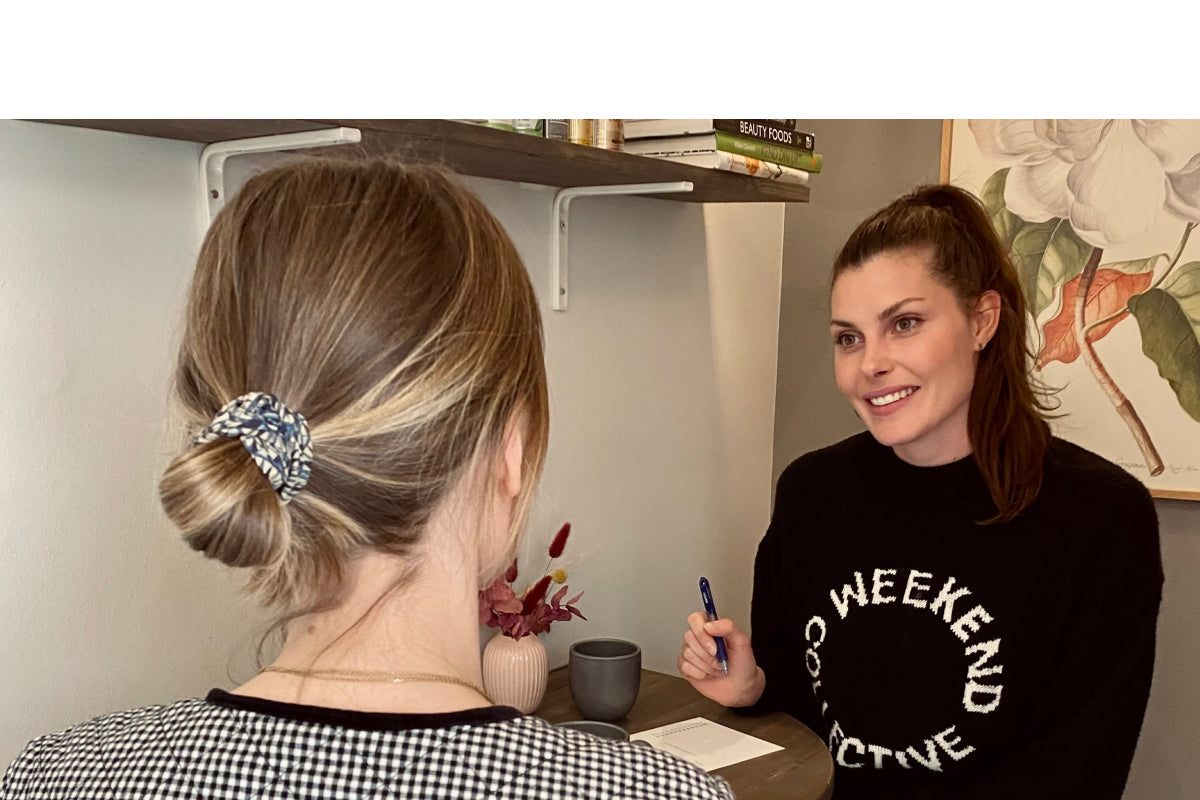
After a few years, nutrition and gut specialist Katrine Madsen was hired to guide clients trough the microbiome test and future steps, and for her, the fact that Unseen Bio is Danish, was the first thing that stood out. "For once there was something on the Danish market." The visual design of the reports mattered too. "As the person sitting and guiding, it's so much easier to show something visual to the client sitting next to you." Katrine Madsen elaborates.
GutCollab’s client is a wide span of people with IBS, Crohn’s, skin problems etc. But common for them all is that they want something specific. "Many of the people who come to us want real insight into their microbiome, rather than just symptom management." says Caroline Alsted.
Talk about becoming a health partner
Four Tests Through Cancer Treatment
One of these clients was Vibeke Haaring.
She came to GutCollab after developing gut problems, and shortly after starting with GutCollab, she was diagnosed with cancer in the anal canal.
She decided to track her microbiome through the entire process, taking four tests in total: one before any treatment, one when she started at the hospital, one when she finished chemotherapy and radiation, and one about a month and a half after that.
Through treatment, the tests let her follow what was happening in her gut and what she could do to support recovery. "It was fantastic to get insight into how much power I have to change the health of my own gut by getting the right guidance," she says. She followed every recommendation.
What she found most valuable was the guided interpretation alongside the data. "One thing is getting your answers and recommendations sent to you. But talking to a person about them, having someone guide you and say, okay, do this first, has been extremely good."
Katrine Madsen noticed something else looking back: the last test Vibeke Haaring took before symptoms appeared had already shown imbalances. "The picture matched up, and we could already see it in the test before the body showed it."
Vibeke Haaring was declared fully healthy in August ´25 and goes in for checks every three months. She plans to take a microbiome test every six to nine months going forward. "It goes faster than going to the doctor, and it works," she says.
From Guesswork to a Plan
For GutCollab, the tests mean being able to build specific plans rather than working from symptoms and hypotheses. "With the test, we have something concrete to work with. If something is off in the microbiome, it plays out in so many other places. Whether it's hormones, the immune system, inflammation, or mental health" Katrine Madsen says.
For clients, founder Caroline Alsted says the most consistent response is motivation. "Many get relieved or become more motivated, because they suddenly get something in black and white. Instead of only having abstract symptoms and feelings to relate to, they can suddenly see what's happening inside them."
For both Caroline Alsted and Katrine Madsen gut health is where it starts with almost everything. "If there's calm in the gut, there's usually calm in a lot of other things too."
Edited: Since then Caroline Alsted has chosen to changed the company name to Caroline Alsted.
----------------------------------------------------------------------------------------------------
By Linda Nygaard (Communication Manager)


